

Cannes 2026: Notebook #2
An Update From The Streets and Screens of Cannes


Previously:
Cannes 2026: Preview
Cannes 2026: A Quick Bande-Annonce
Cannes 2026: Notebook #1
Follow my full Cannes screening schedule at my Letterboxd
It’s the middle of the festival and, after days of standing in lines, staying up too late, and screening films, tempers are starting to fray. Well, not mine, and not the absolutely lovely staff at the Cannes Film Festival, who I have witnessed endure the most shitty, entitled abuse at the hands of a bunch of losers, over and over again. I have no idea how they do it, and they deserve every ounce of praise I can muster— from the “lines” for the screenings (which, as I said earlier today, “Everyone at Cannes seems to think that lines are for everyone else”) to the quest for a desired seat, an entire universe of people used to being glazed when they walk into a cinema are suddenly force to grapple with the realization that they are just like everyone else. To spare my own sanity as yet another short king nudges past me in a line in order to get that one seat they must have, I have resorted to wearing my headphones as we queue up, playing sunshine pop and working hard to maintain an amused sense of the absurdity of it all.
So, this is a note to my readers to remind them to follow the rules, recognize that the stakes could not be lower, and to be kind to one another and the lovely, hard working team at the festival who are trying to make sure that people have access to what they are entitled to, and then sit where they have been assigned. Anyway. I see you, Cannes staff, and the hard work you’re doing. Congrats on working so hard to make it a great experience.
I’ve seen several pieces online asking about the absence of Hollywood films in the program, and how festival screenings are now seen as “risky” after big films have received tepid responses at global festivals, and how studios are looking to control every aspect of a film launch. Let me say that, right now, the last thing we need is a cinema being divided along nationalist lines, where the business is cynically framed in an “us vs them” narrative of global competition in a “Hollywood vs the world” dynamic. If anything, Cannes is proving that, once again, cinema is much more dynamic, diverse, and durable than whatever the trend spotters are trying to impose on us. Studio titles have only ever been a fraction of this festival is about, and the program is always a wide-ranging look at global cinema. I am reminded of Cannes’ 60th Anniversary, when the festival commissioned an anthology of short films called “To Each His Own Cinema”, which is the perfect motto for how the art form should be approaching this time in our history— whatever brings you joy, make it, find it, watch it, love it, and build connections with those who look to cinema for the same reasons, whatever they love. In this way, cinema can unite us. This is the path forward, and Cannes remains a sacred home for all who want to build it.
FILM CAPSULES
ALL OF A SUDDEN by Ryusuke Hamaguchi
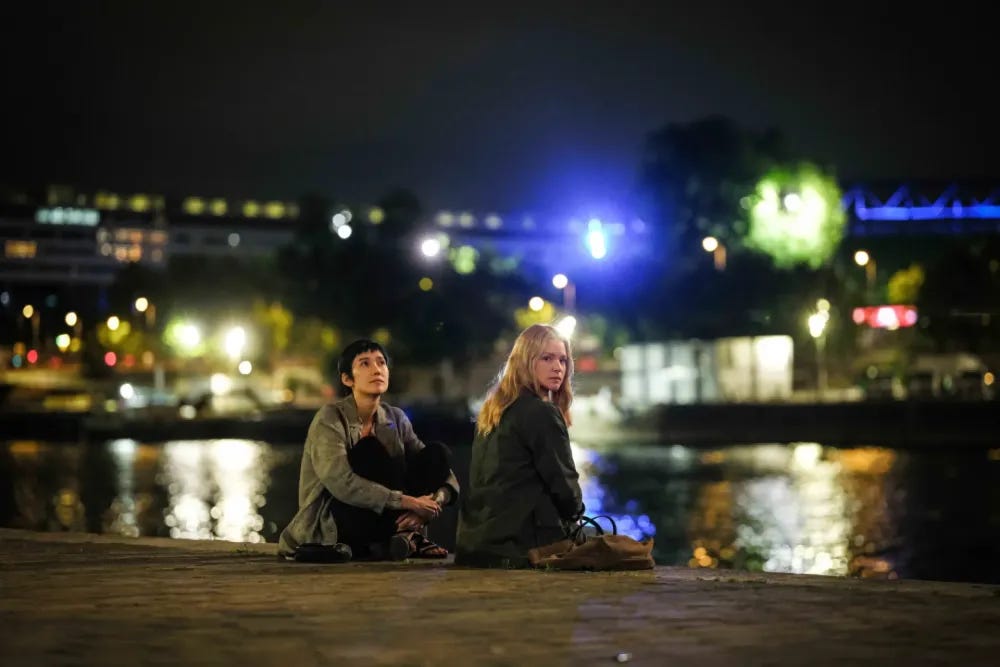
Well, I did not see this coming. Ryusuke Hamaguchi’s new film is an indescribable experience; the story of a friendship between a French nursing home administrator and a Japanese theater director who is living through a terminal cancer diagnosis, ALL OF A SUDDEN leans into the commonality of experimentation in the women’s work to create a deeply moving, funny, one of a kind film. Hamaguchi’s deep compassion for and connection to that work brings the film itself in direct alignment with the women’s critiques1 (yes, plural) of capitalist alienation and the status of those living outside of the consideration of the system, specifically drawing a distinct connection between dementia and neurodivergence that is breathtaking in its inclusivity. It is also the story of a beautiful friendship, the power of uniting medical care with art making, and the value of our work to the meaning of our lives. I need to see this again as soon as possible, but there is no doubt it is a triumph. Off to buy a whiteboard and tear this mother down!
SHEEP IN THE BOX by Hirokazu Koreeda
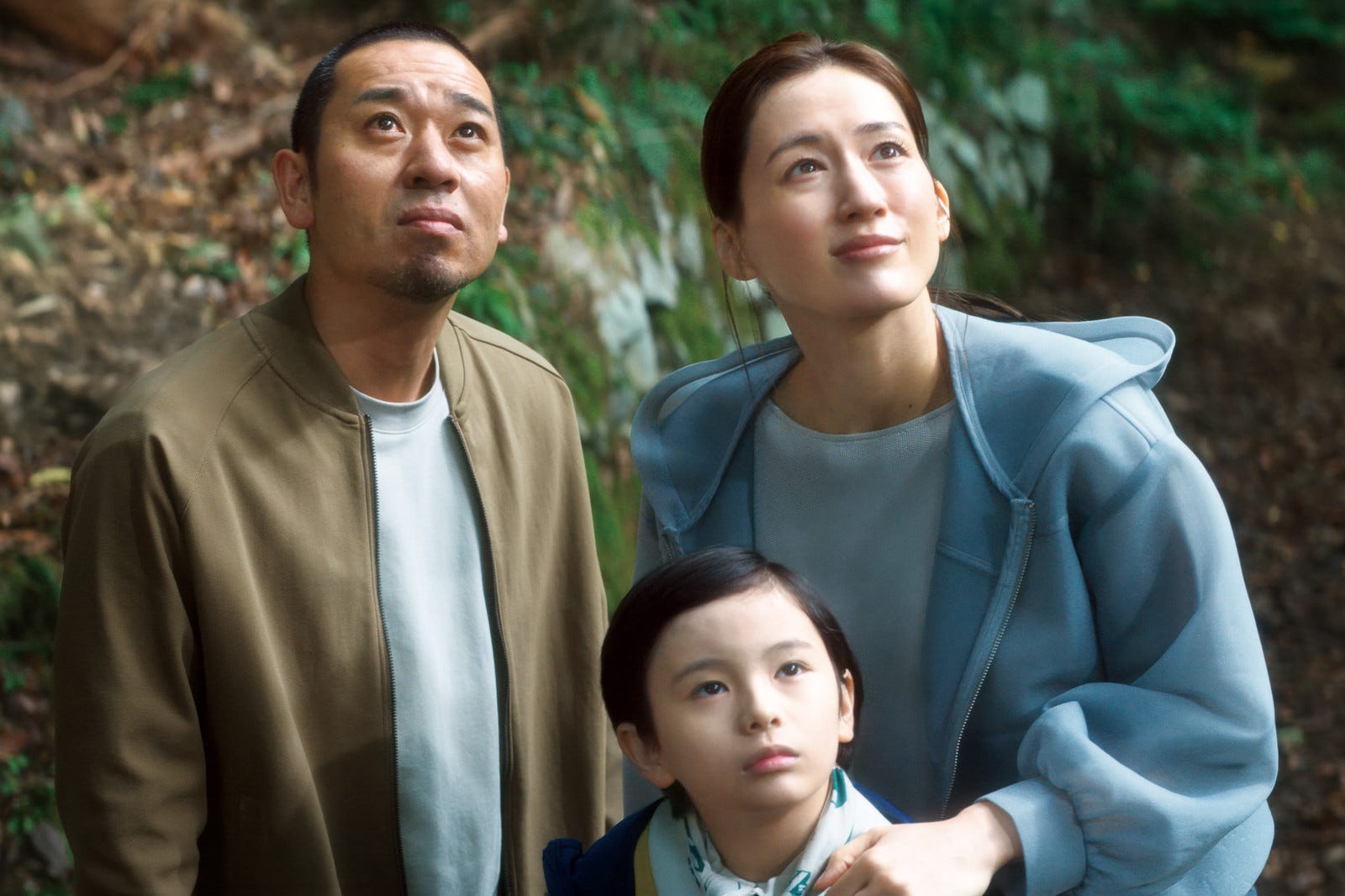
Hirokazu Koreeda leaps into science fiction to expand upon his longstanding narrative interest in the social welfare of children. Here, however, he inverts his usual focus by instead centering the story on a grieving couple who, in the aftermath of the tragic, unresolved loss of their son, acquire a robot child who is designed to look, act, and remember exactly like him. To say what happens after that would spoil the movie, and so I won’t, but I will say that the movie draws heavily from a wide range of intersting influences including Speilberg’s A.I., PETER PAN, and the style (not the narrative details but the storytelling style) of something like a live action Hayao Miyazaki film. One clue for those interested in doing some homework is the title, which comes from a famous moment Antoine de Saint-Exupéry’s THE LITTLE PRINCE and which here is inverted as a metaphor to show us how adult self-interest prevents children from becoming all they want to be. A very interesting turn for Koreeda, stepping away from the social relaism of his previous work to find a new path to the same, empathetic conclusions he continually shares with us. For that alone, I will always love his films— he has the biggest heart in cinema.
PAPER TIGER by James Gray
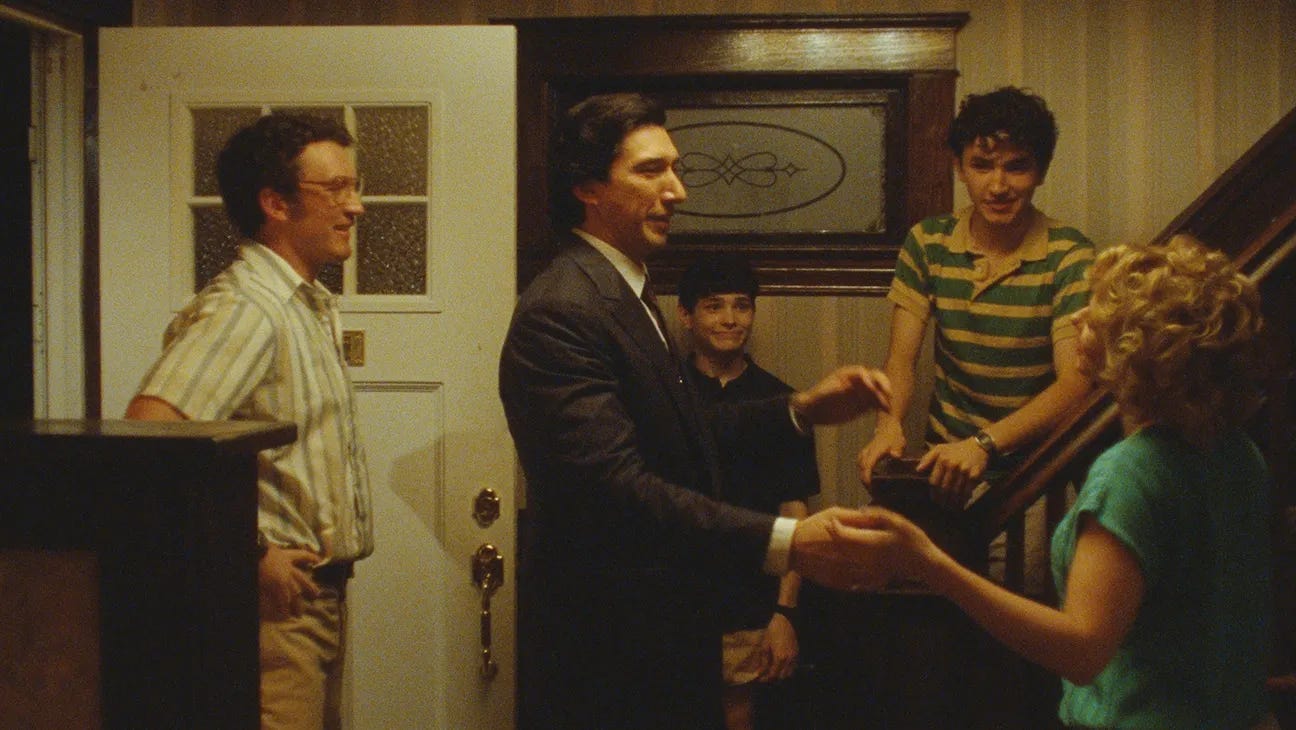
James Gray returns to the oil slicked streets of industrial Brooklyn for his new film PAPER TIGER, which follows Irwin Pearl (Miles Teller), a squarely middle class engineer with college costs for his kids looming on the horizon, and his brother Gary (Adam Driver), a former NYPD cop who wants to use his charisma and connections to find commercial opportunities at the margins of the city. When Gary recruits Irwin to help out with a new consulting business that will help companies clean and develop the Gowanus Canal2, things quickly go south and Brooklyn’s Russian criminal gangs decide to take matters into their own hands. Nobody shoots Brooklyn like Gray, who returns to the dark, hidden spaces of the city that defined his early films like THE YARDS, LITTLE ODESSEA, and WE OWN THE NIGHT— there is a terrifying reality lurking in the shadows, and one false step can pull you into an unforgiving vortex of violence. But it is more than just a crime film; PAPER TIGER is a story of the insidiously American relationship between corruption and the perception of success, and the film works as both noir and melodrama. In Gray’s hands, the specificity of time, place, and culture, are deployed in the service of a story about home and family, which ends up with its own unexpected complications. In PAPER TIGER, all of the little details feel just right3— these are everyday people in a big city they think they know but don’t truly understand, and Gray is the perfect filmmaker to bring that tension into sudden, heartbreaking focus.
More soon… two more days of screenings for me, with some of my most anticipated films coming up soon! Thanks for reading!
You’re going to need to see the whiteboard scene. Trust me on this.
A mere two blocks from my home for the past 25 years, thankyouverymuch.
Conversation in French behind me at the screening that followed PAPER TIGER:
Man 1: “Tu viens de voir PAPER TIGER?”
Man 2: “Oui. Excellent."
Man 1: “Classique”
Man 2: “Tres American”
Man 1: “Oui”